
Project context
At a glance
⚙️ Feature: Internal invoicing tool used daily by Sales Reps to manage subscription billings and payments
⚠️ Existing issues: Inaccurate data caused delays in service delivery and reliance on manual workarounds
📉 Business impact: Reduced customer confidence, created uncertainty around revenue recognition, and reporting inaccuracies
🎯 Product goal: Restore trust and reliability in subscription data
🧭 Strategic value: Create a dependable data foundation for future operational and reporting products
Problems to address
Eliminating unreliable and conflicting subscription data
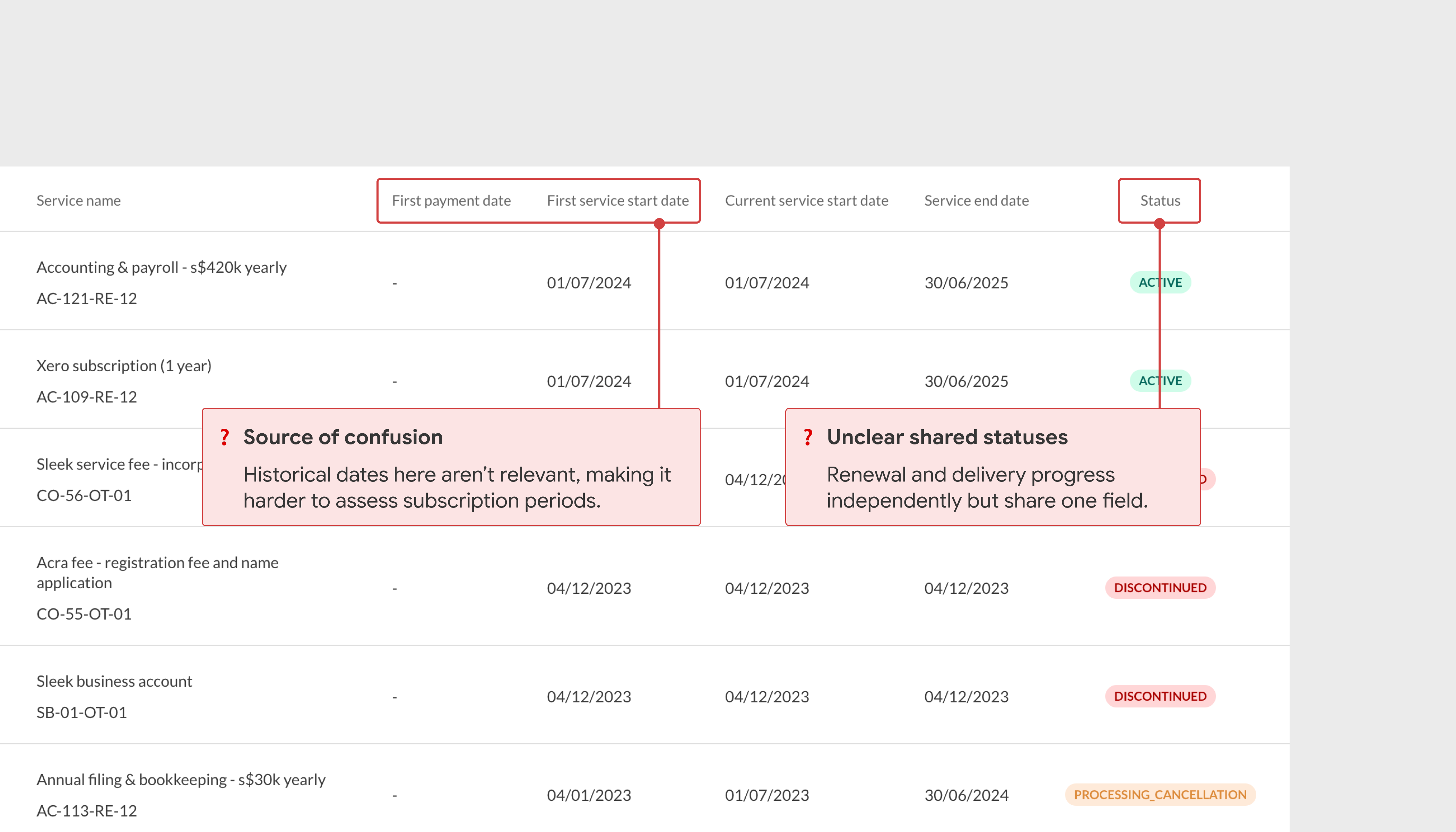
Data structure that scaled poorly
Conflicting subscription data
Shared fields for renewal and delivery information leads to conflicting updates and misalignment between Sales Reps and Ops.
Manual checks slowed workflows
Lack of reliable subscription data forces manual verification, often resulting in delayed service delivery, missed deadlines, and unplanned work.
Gaps in creation
Manual start date entry
Custom renewal start dates created gaps between subscription periods, breaking the intended year-over-year service model. This led to operational overhead and customer dissatisfaction.
Unclear billing context
Without a recording billing purpose or timing, the company lacked clear insight into customer subscription activity.

Designing a solution
Ensuring reliable subscription data during creation
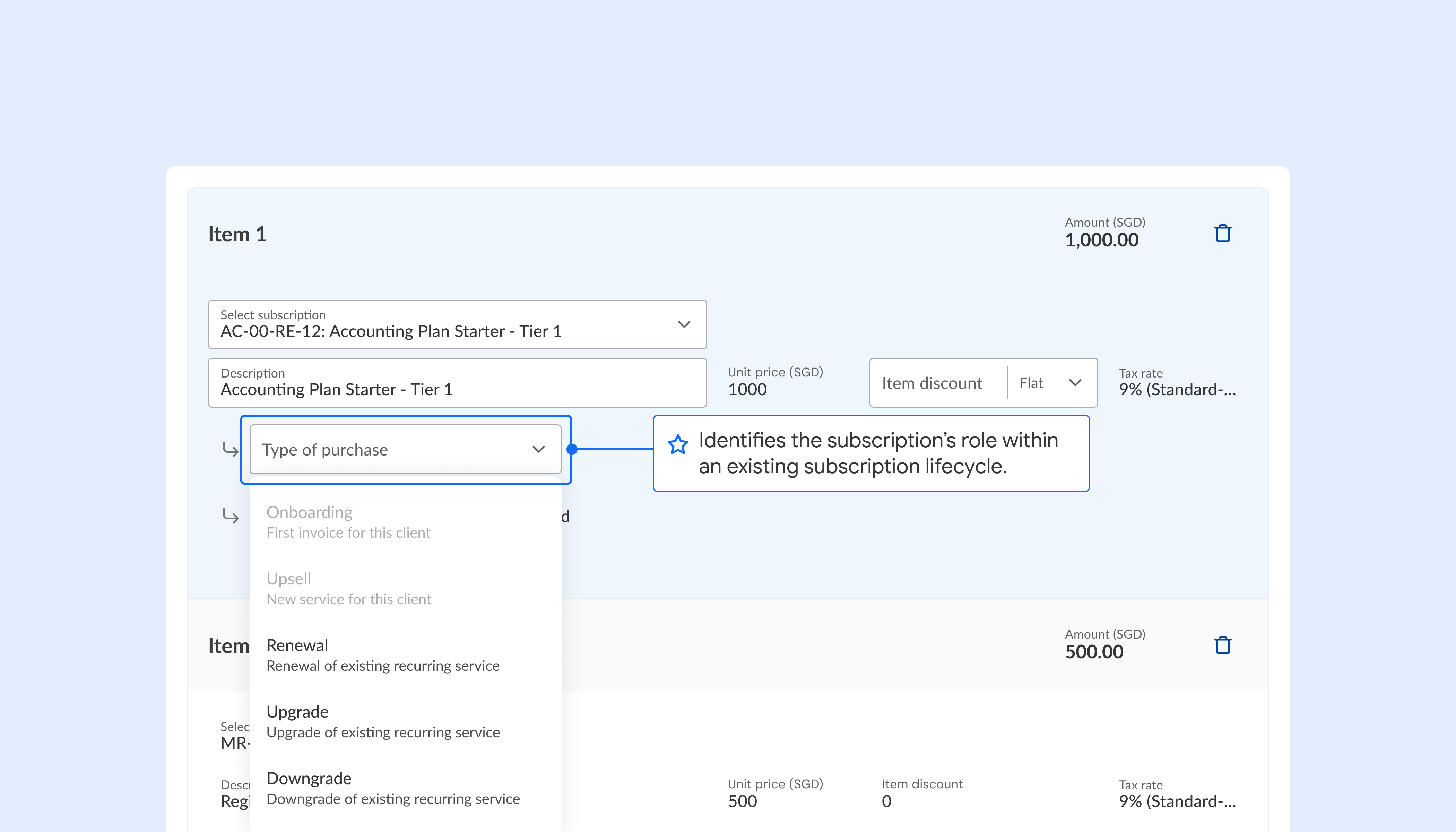
Subscription lifecycle visibility
Identifying a subscription's place within its lifecycle provides finance and operation teams clearer insights for downstream reporting and revenue recognition.
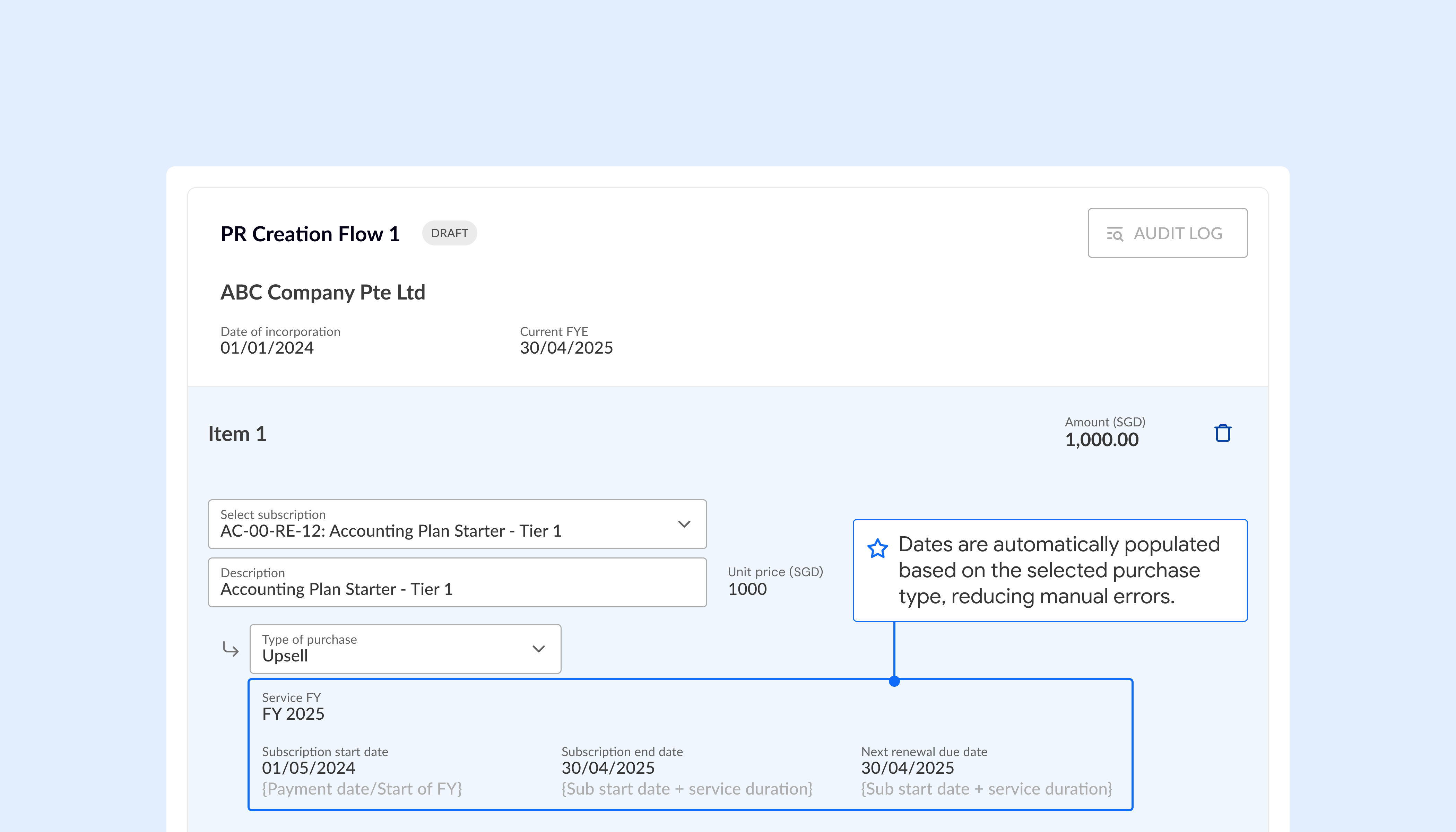
Prevent date entry errors
Key subscription dates are now auto-populated using predefined rules, eliminating manual edits and reducing the risk of inconsistent or conflicting data.
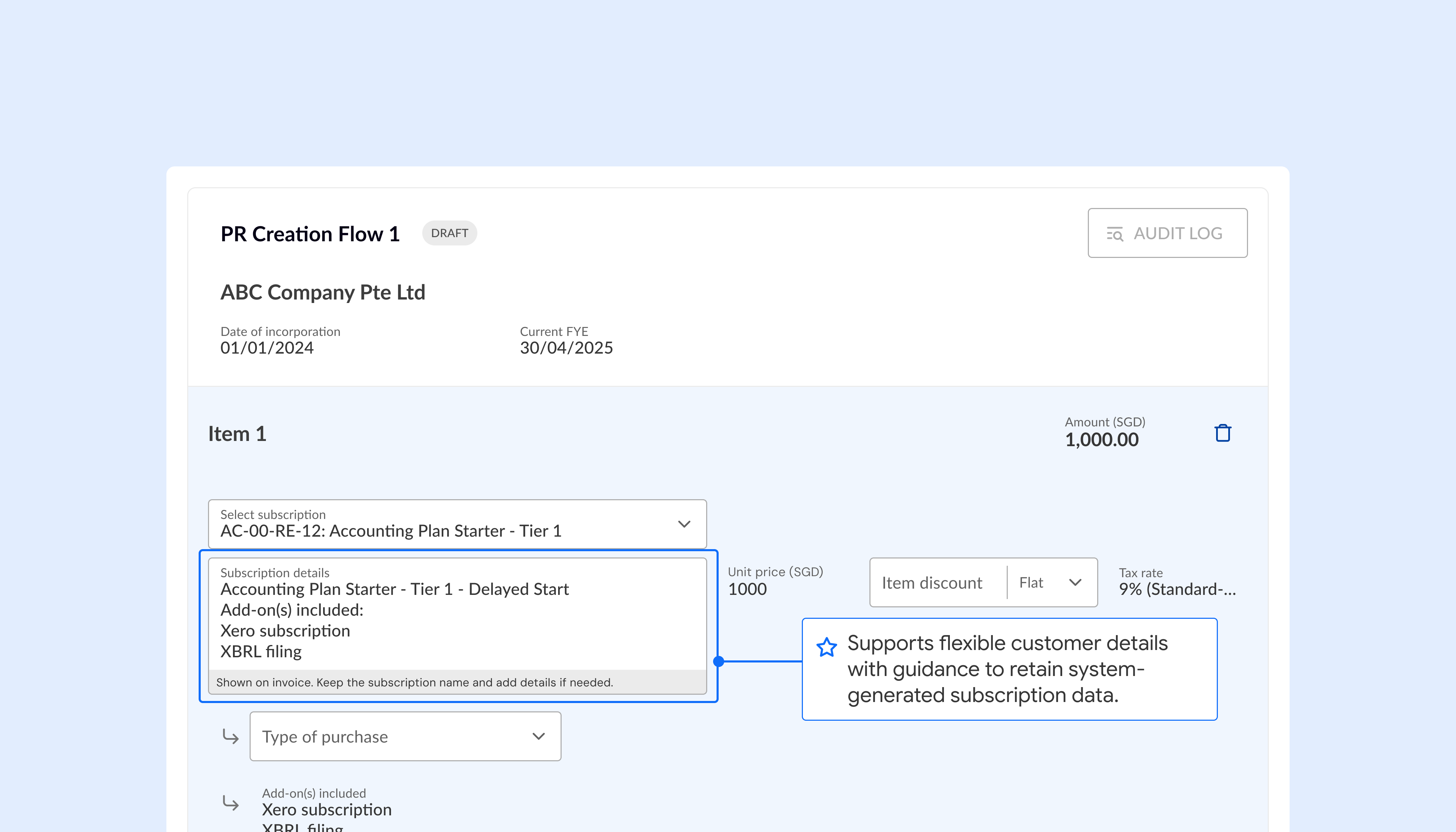
Flexible payment request details
Caters to varying customer needs by reflecting agreed subscription details on payment requests.
Reducing cognitive load with Active/Inactive states
Inputs are shown only for active items, while inactive items are summarised, helping users complete payment requests wihtout overwhelming detail.

Reflection
Trust and control in data management
Gathering informal feedback: A Slack channel revealed frequent requests to edit subscription dates, prompting enhancements to allow changes to start and end dates.
Learning: Design for more user flexibility, and assess trust and control over data rather than inferring from past errors.